First Session
 |
| Dr. Shrestha delivering his lecture |
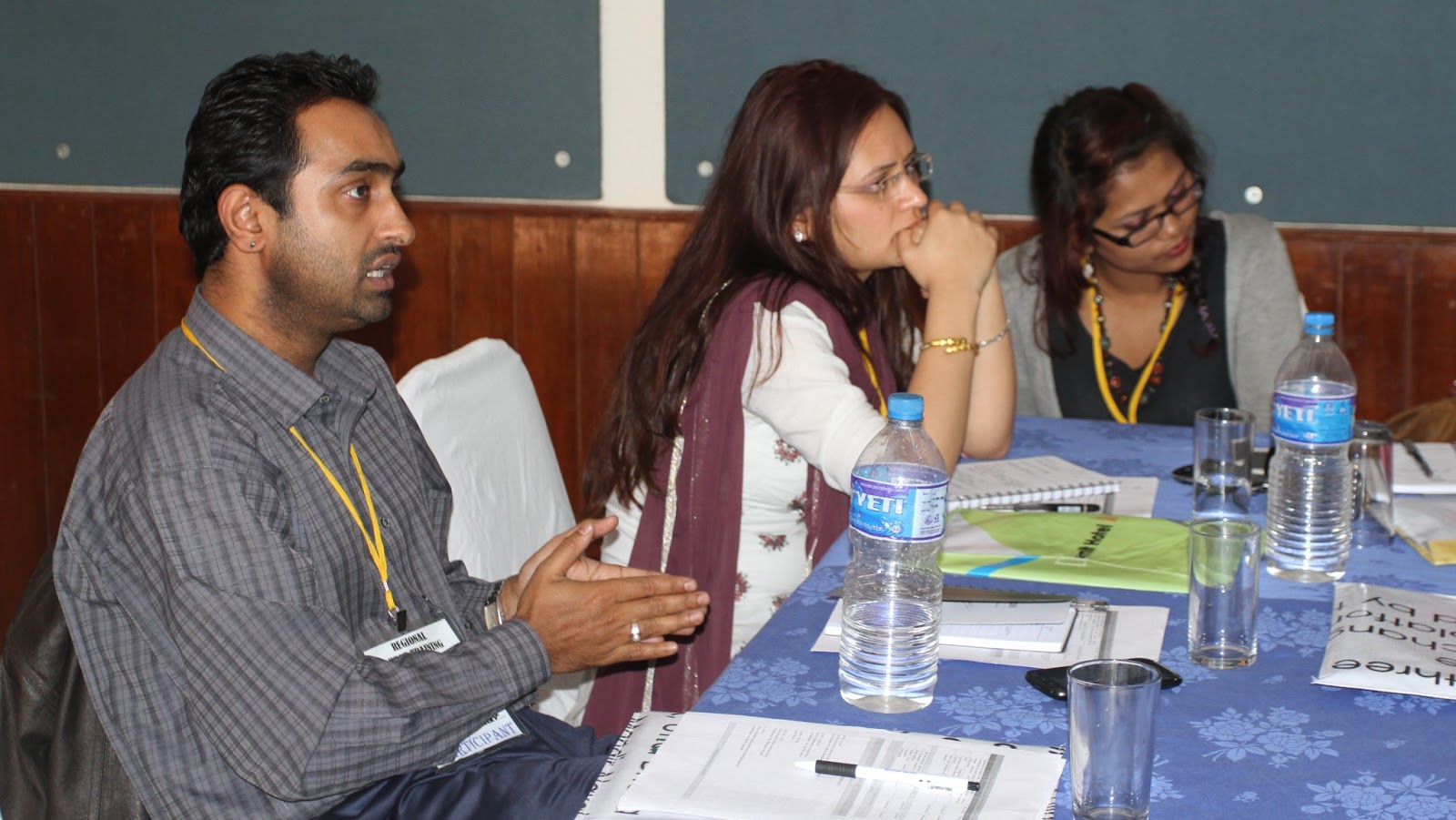
First session of the Second day of Regional WASH Training 2013 began with the presentation of Dr. Bim Pd. Shrestha. Dr. Shrestha presented on "Replication and Upscalling of Bio-electrification for street lighting through agricultural and livestock waste" based on the experience gained from the project carried out in Kathmandu. He briefly introduced the site where the project was carried out. The site, he said, was selected based on the availability of agricultural and livestock waste. He also added based on the experience of the project that the selection of the site need to consider community as well because without active participation of the community, it will be difficult to run such projects.


Dr. Shrestha presented the status of bio-electrification in the world and its rationale. Government of Nepal, he informed, has also started giving priority to bio-electrification. Then, he elaborated on practical limitations involved in carrying out such project. The trainees were then informed about the process involved in producing bio-gas from the waste and then producing electricity for consumption.
Informing the inside story of the project, he informed the trainees why the project did not function as anticipated. The provision to allow the use of gas cylinder as additional/optional source was the main reason for the failure.
He concluded that technical excellence does not guarantee the success of any such project; there is a need to incorporate social dynamics of the community involved in the project.
What Next?
Another project, which is being carried out in Shova Bhagawati in collaboration with Water Aid Nepal, has taken the issue of community involvement and other aspects that had hindered previous project.
The Second Session
 |
| Prof. Khanal delivering lecture |
The second session was facilitated by Prof. Dr. Sanjay Nath Khanal on "Indoor Occupational Environment: Additional Aspects of Sanitation". He commenced his lecture with an answer to why the issue of indoor smoke is of importance in WASH and provided an overview of air pollution statistics and the diseases caused by the particles in the world and in Nepal.
With the information, he highlighted on the components that cause pollution and the affects due to different types of the pollutants. Further, he informed about the ways to control/reduce indoor pollution. Some of the measures can be thermal comfort, measurement of airflow, airborne dust, combustion products. These measures, he added, can be taken easily; they need no policy level intervention. But, there are measures which need such intervention.
The unavailability of national policy, he concluded, has made it difficult to address the issue in more appropriate way.
Third Lecture
 |
| Dr. Khatiwadi during lecture |
Associate Prof. Dr. Nawaraj Khatiwada delivered presentation on "Water Supply Technology and Innovation". Beginning the session with two questions, he emphasized on the importance of managing waste water. Availability of techniques, he mentioned, is not the major problem - the problem lies in using available resources appropriately. If available techniques can be used, a large number of problems can be addressed.
 |
| Dr. Khatiwada with the participants after presentation |
Regarding the cost aspect, he stated that we largely fail to calculate the cost for construction/maintenance and other aspects of water supply. Consequently, water supply largely remains un-managed. He presented some of the innovative techniques being used in Nepal. He concluded that we have potential to do it together.
Fourth Lecture
 |
| Asst. Prof. Lohani delivering lecture |
The fourth lecture was delivered by Mr. Sunil Pd. Lohani on "High Rate Anaerobic Digestion for Wastewater Treatment & Biogas Production". Mr. Lohani began with the focus on adaptive research instead of focusing on invention aspect.
 |
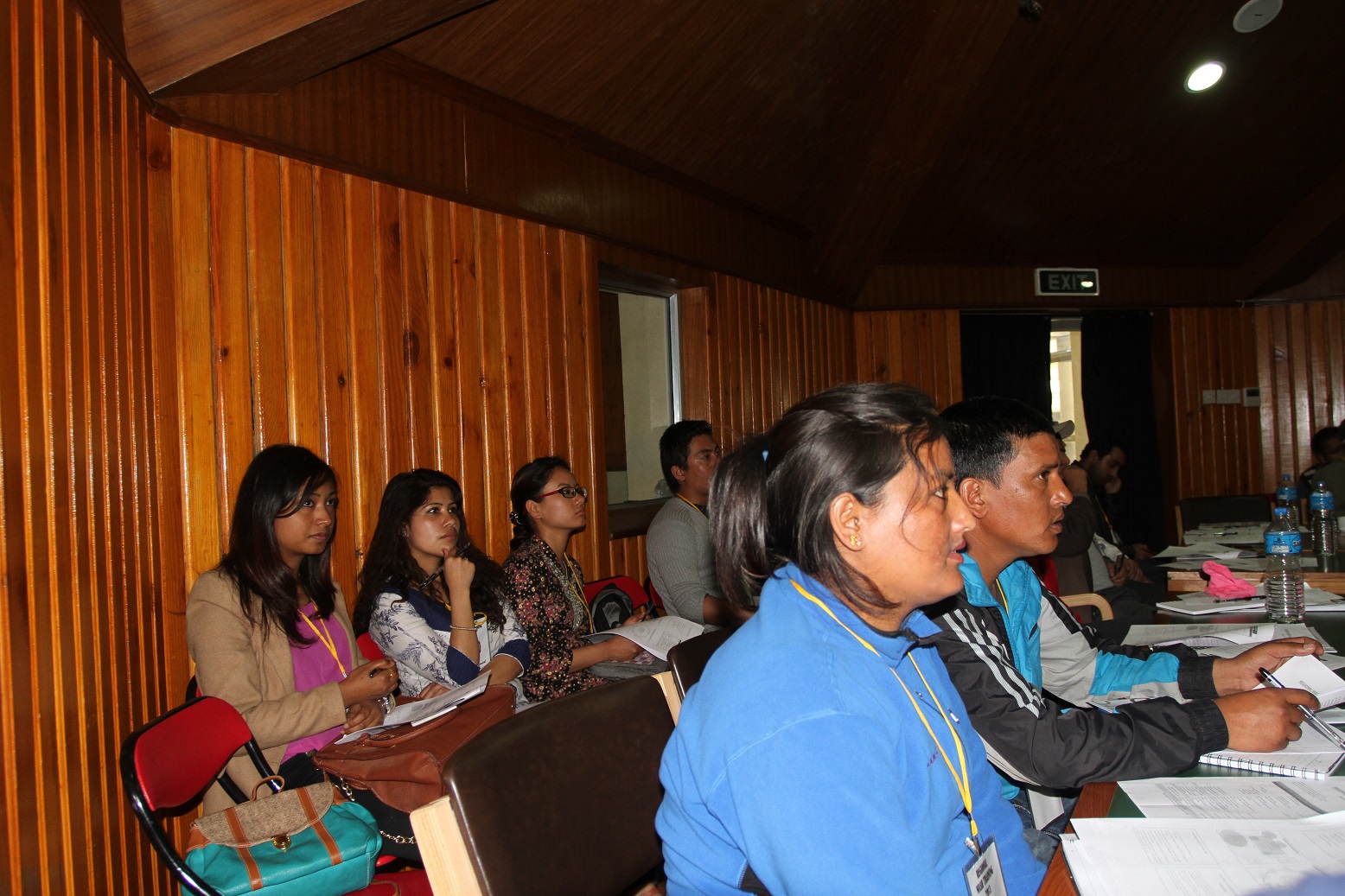
| Participants during the lecture |
He introduced the trainees with different technical terms of the field and acquainted them with simple techniques that can be used for sanitation. Anaerobic Baffle Reactor, he stated, is a large and modified version of safety tank. The efficiency of ABR, however, is not optimistic in Nepal, he added. Another technology, HRAD, is more efficient than safety tank and ABR. He further explained the components and functioning of UASB and the reasons for its better functioning. He claimed that UASB can be one of the best options for sanitation.
Fifth Session
 |
| Asst. Prof. Ms. Knanna during the lecture |
Ms. Sabita Aryal Khanna delivered the fifth lecture; the topic was
WASH in IWRM: Experience of IWRM in Durlang. Sharing some of the interesting experiences during the project and the fact about the availability of water, she presented the facts about water resources of Nepal and emphasized on the importance of IWRM. In the absence of IWRM, the condition of WASH will lag behind, she said.
Ms. Khanna stated that it is also due to the typography of Nepal, we must resort to integrated water management. Presenting schematic diagram of IRM, she explained about the activities we can do to manage water appropriately. She concluded that IRM will be possible through the active participation of community; and it will help to reduce potential conflict among the water users.